Front View of Payson Utah Temple: A Designer's Review
As an embroidery designer who spends countless hours digitizing and reviewing files for commercial application, I approach every new machine embroidery design with a critical eye toward business viability. It is not enough for a file to look pretty on a screen; it must perform under the needle, withstand industrial washing, and elevate a brand's identity. Today, I am reviewing the Front View of Payson Utah Temple, a stunning redwork embroidery file that has caught my attention for its potential in the travel and local heritage markets. This review focuses specifically on how small business owners, from boutique cafes to handmade product creators, can leverage this asset for branded merchandise.
First Impressions and Visual Personality
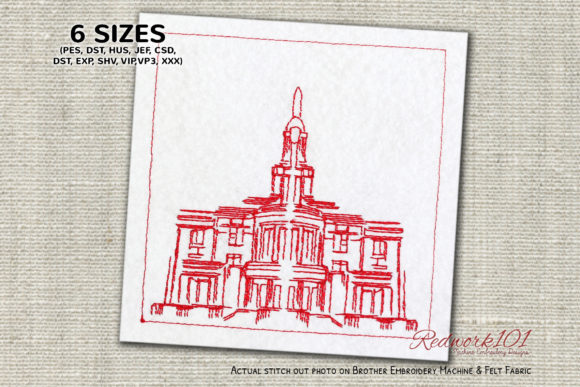
Upon loading the digital embroidery file for the Front View of Payson Utah Temple, the immediate impression is one of classic elegance and architectural precision. The description highlights its nature as a "redwork" design, which traditionally implies a single-color outline style. In a commercial context, this aesthetic translates to a clean, timeless, and slightly rustic feel that works exceptionally well for brands wanting to project authenticity. Unlike complex, multi-color logos that can appear busy on small items, this design relies on strong line work and negative space.
The visual personality here is professional yet inviting. It feels less like a corporate logo and more like a badge of honor or a commemorative mark. For a small business located in Utah or one that caters to travelers and tourists, this design offers a sophisticated way to connect with local culture. The optional "Box Stitch" mentioned in the product details adds a layer of versatility, allowing the designer to frame the temple for a more structured, patch-like appearance or leave it open for a floating, organic look on garments.
Real-World Applications for Small Business Merch
When evaluating a design for small business merch, we must look beyond the hoop and imagine the finished product in the hands of a customer. The Front View of Payson Utah Temple shines in several specific commercial applications:
- Embroidered Patches: This is arguably the strongest use case. The architectural lines of the temple translate beautifully into a woven or embroidered patch. A local bakery or coffee shop could use this as a limited-edition run for loyalty programs, sewing them onto canvas tote bags or denim jackets.
- Staff Uniforms and Aprons: For a boutique hotel or a high-end florist, adding this design to staff apron embroidery creates a sense of place. It acts as a subtle nod to the community without overwhelming the uniform. The redwork style ensures it remains legible even from a distance.
- Cap Embroidery: Placed on the side panel or centered on the front of a structured cap, this design serves as an excellent conversation starter. However, care must be taken regarding the curvature of the cap, which I will address in the technical notes below.
- Tote Bag Design: Canvas totes are a staple for craft fairs and retail shops. The simplicity of the redwork style prevents the design from getting lost in the texture of heavy canvas fabric, making it a perfect tote bag design for shoppers.
- Customer Gifts and Event Merch: For businesses hosting events or retreats, this file can be quickly stitched onto napkins, handkerchiefs, or linen tags as a premium takeaway item that reinforces the event's location and theme.
Technical Considerations and Production Challenges
While the aesthetic appeal is high, a professional reviewer must also identify potential pitfalls in production. The Front View of Payson Utah Temple features detailed architectural elements that require careful handling during the stitching process.
Stitch Density and Fabric Texture: Redwork designs typically have lower stitch density than fill-heavy logos, which is generally positive for fabric drape. However, on textured fabrics like thick wool blends or rough canvas, fine lines can sometimes get lost or appear jagged. I recommend testing this design on a smooth twill or medium-weight cotton first to ensure the spires and windows of the temple remain crisp.
Small Patch Sizes: If you intend to use this as a small chest logo or a tiny patch (under 2.5 inches), the intricate details of the temple facade may merge together. In commercial embroidery, clarity is king. You may need to request a simplified version of the file from the digitizer if the original proves too detailed for miniature applications.
Curved Surfaces and Cap Fronts: Embroidering architectural straight lines on a curved surface like a baseball cap is notoriously difficult. Without proper framing and a high-quality stabilizer, the vertical lines of the temple could distort, making the building look like it is leaning. Always use a cut-away stabilizer for caps to maintain structural integrity over time.
Color Contrast: Since this is marketed as a redwork design, thread choice is paramount. While traditional redwork uses red thread on white fabric, modern branding often demands flexibility. Ensure there is sufficient contrast between your chosen thread colors and the garment. A dark navy thread on a black uniform will render the design invisible, destroying the brand impact.
Impact on Brand Identity and Customer Trust
Incorporating the Front View of Payson Utah Temple into your product line does more than just decorate an item; it anchors your brand identity to a specific location and set of values. For local businesses, using recognizable landmarks signals pride in the community. It tells the customer, "We are part of this place."
This connection fosters trust. When a customer sees a well-executed, locally relevant design on a handmade product or a staff uniform, it elevates the perceived value of the business. It suggests attention to detail and a commitment to quality. Furthermore, in the age of social media, visually distinct merchandise acts as free marketing. A customer wearing a cap with this distinctive temple design becomes a walking billboard, driving recognition and engagement for your brand.
Professional Designer Notes for Implementation
Before committing to a large production run of custom apparel or accessories featuring this design, adhere to the following checklist to ensure professional results:
- Test in Black and White First: Print a grayscale version of the design to check for contrast issues. If the details disappear in gray scale, they may vanish when stitched with low-contrast threads.
- Verify Hoop Size: The product description does not specify the exact dimensions. Confirm the required hoop size against your machine's capabilities before purchasing the file.
- Check Commercial Licensing: Ensure the license terms allow for resale of finished goods. Some digital files are for personal use only, which would prohibit selling items with this design.
- Create a Printable Mockup: Before stitching, create a printable mockup to show clients or stakeholders. This helps visualize scale and placement on the final garment.
- Inspect Spacing: Look closely at the spacing between the spires and the main structure. If the gaps are too narrow, they may fill in with thread during high-speed machine embroidery.
- Compare Design Assets: Place this file beside your existing logo and other design assets. Does it complement your current visual language, or does it clash?
In conclusion, the Front View of Payson Utah Temple is a versatile and evocative asset for any business operating within the travel, hospitality, or local retail sectors. Its redwork style offers a blend of tradition and modern minimalism that appeals to a wide demographic. By paying close attention to fabric selection, stabilization, and sizing, small business owners can transform this digital file into a powerful tool for brand storytelling and revenue generation. Always remember to verify the specific file formats and stitch counts provided by the seller to ensure compatibility with your specific embroidery setup.