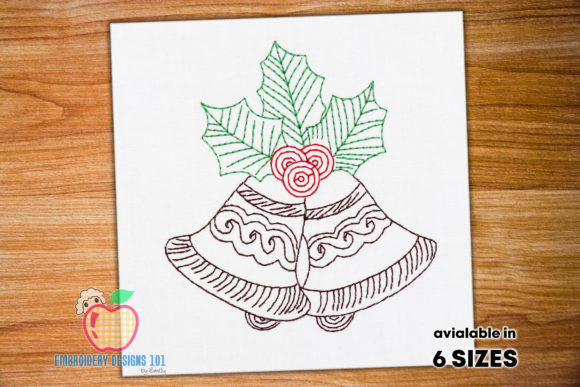
Decorative Bell: A Minimalist Line Art Review for Holiday Projects
As a designer who spends more time at the hoop than away from it, I approach every new machine embroidery design with a critical eye. It is not just about whether the image looks cute on a screen; it is about how those stitches lay down on actual fabric, how they hold up after a wash cycle, and whether they elevate the perceived value of the finished product. Recently, I took a close look at the Decorative Bell, a line art design categorized under Christmas themes. This isn't your typical dense, fill-heavy holiday motif. Instead, it relies on running line stitches in a Single Triple Run format. For those of us running small shops or creating personalized gifts, this distinction matters immensely.
First Impressions: The Power of Negative Space
The first thing that strikes me about the Decorative Bell is its confidence in simplicity. In a market saturated with over-stitched, glitter-heavy holiday graphics, this design chooses to breathe. The mood it creates is modern, elegant, and slightly rustic. Because it utilizes running stitches rather than satin or fill stitches, the visual personality is light and airy. This makes it an incredibly versatile embroidery file for projects where you want the fabric texture to show through. Whether you are working with a linen tea towel or a heathered sweatshirt, the design doesn't overpower the material; it complements it.
For an Etsy seller or boutique owner, this aesthetic is gold. It fits perfectly into the current trend of minimalist home decor and understated seasonal fashion. The shape is recognizable instantly as a bell, yet the execution feels like a hand-drawn sketch brought to life by thread. This level of detail suggests a handmade quality that customers often seek when buying handmade products versus mass-produced goods.
Real-World Application: The Tote Bag Test
To truly evaluate this design, I imagined a specific real-life scenario: preparing a run of custom canvas tote bags for a local holiday market. Canvas is a textured, medium-weight fabric that can sometimes chew up delicate designs if the stitch density is too low or the direction is wrong. However, the Decorative Bell shines here. Since the description notes these are "running line stitches," the design likely avoids the puckering issues common with heavy fill stitches on thick materials.
Picture a natural beige tote bag with the bell stitched in a deep forest green or a classic crimson. The contrast would be striking without being loud. Because the design stitches out quickly—often in minutes, according to the specs—it allows for high-volume production without sacrificing quality. For a craft business owner, time is money. Being able to churn out twenty of these totes in the time it takes to do five dense jackets is a significant operational advantage. Furthermore, the lightweight nature of the stitching means the bag remains flexible and usable, rather than becoming stiff and board-like around the graphic.
Apparel and Soft Goods Versatility
Beyond totes, this design is a strong contender for custom apparel. Imagine a cozy, oversized crewneck sweatshirt. A large, dense embroidery patch on the chest can feel heavy and restrictive. The Decorative Bell, with its linear approach, sits lightly on the knit fabric. It would also work beautifully as a sweatshirt embroidery accent on the sleeve or near the hem, offering a subtle nod to the season rather than a billboard declaration.
For baby embroidery projects, such as a muslin swaddle or a cotton onesie, this design is particularly safe. Heavy stitching can irritate sensitive skin, but fine running lines are generally soft and flat. It transforms a basic white garment into a special personalized gift suitable for a newborn's first Christmas. The lack of complex underlay or dense saturation reduces the risk of the fabric gathering or distorting, which is crucial when working with stretchy or delicate materials.
Technical Considerations and Fabric Compatibility
While the Decorative Bell is described as "fun and easy to stitch," a professional reviewer must address where caution is needed. Running stitches, especially in a triple run configuration, rely heavily on the stability of the base fabric. If you attempt this on a highly textured fleece or a loose-weave wool without proper support, the stitches might sink in or fail to bridge the gaps cleanly.
Stabilizer choice is paramount here. On stretchy fabrics like t-shirts or caps, a cut-away stabilizer is non-negotiable to prevent the design from distorting over time. On woven items like aprons or pillow covers, a tear-away might suffice, but testing is essential. Because this is a line art design, there is no solid fill to hide minor registration errors or fabric shifts. Every line must be crisp. If the tension is off, the "sketch" effect turns into a messy scribble.
Additionally, consider the hoop size. While line art often fits into smaller hoops, ensure the design's proportions don't get lost if scaled down too far. Tiny details in the clapper or the bow of the bell could merge if the design is minimized beyond its intended resolution. Always check the minimum stitch length capabilities of your machine before committing to a tiny version of this design.
Color Strategy and Visual Impact
The beauty of a single-color or limited-color line design lies in the thread choice. With the Decorative Bell, you aren't relying on color blending to create depth. Instead, you rely on thread colors to define the mood. A metallic gold thread on navy velvet creates a luxurious, high-end look suitable for boutique branding. Conversely, a matte white thread on a red flannel shirt evokes a traditional, homespun feel.
It is highly recommended to test this design in black and white mockups first. This helps you judge the balance of the lines without the distraction of color. Does the curve of the bell feel balanced? Is the spacing between the triple runs consistent? These factors determine the stitching clarity and overall professionalism of the item. A well-executed line design signals to the buyer that the maker knows what they are doing, thereby increasing customer trust and brand recognition.
Final Verdict for Designers and Makers
The Decorative Bell is a practical, efficient, and aesthetically pleasing addition to any holiday collection. It solves common problems associated with seasonal embroidery: long stitch times, heavy fabric distortion, and overly busy visuals. For commercial embroidery projects where turnaround time is tight, this design offers a solution that still feels bespoke and thoughtful.
However, success with this file requires attention to detail. Do not assume that "easy to stitch" means "foolproof." You must verify the stitch density relative to your specific fabric. Test on scraps first. Check how the triple run interacts with your specific needle size and thread type. If you are selling these as digital embroidery files or finished goods, ensure you understand the licensing terms provided by the creator. Can you sell the stitched item? Can you sell the file itself? These are critical questions for any creative entrepreneur.
In conclusion, the Decorative Bell excels as a versatile asset for holiday embroidery. It bridges the gap between quick production and high-quality design. Whether applied to a kitchen towel, a tote bag, or a child's pajama top, it delivers a clean, modern look that respects the integrity of the fabric. For designers looking to expand their design assets with something that feels fresh yet timeless, this line art piece is a worthy investment. Just remember: the devil is in the details, so always stitch a sample before launching your full production run.